Safety is usually the most important consideration when selecting glass to be used in construction or design. Laminated vs tempered glass are two of the most popular, each having its own advantages and uses. Knowing the differences between these materials will enable you to make informed choices, whether it is residential, commercial or automotive.
What Is Tempered Glass?
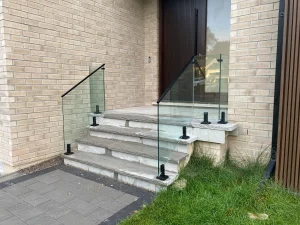
Tempered glass is a form of safety glass which has undergone a heat treatment to make it stronger. It is commonly used on tempered glass railing systems and modern architecture to break into small, non-sharp pieces instead of sharp ones.
What Is Laminated Glass?
It is a glass product that is bonded with two or more layers of glass and an interlayer that is made with plastic. The structure keeps the glass together even after it is broken; hence, it is a favourite structure used in laminated safety glass.
How Tempered Glass Is Made
- Heat Treatment Process: Tempered glass is produced by heating normal glass to high temperatures and then quickly cooling it. In this process, the strength of it is greatly enhanced over normal glass.
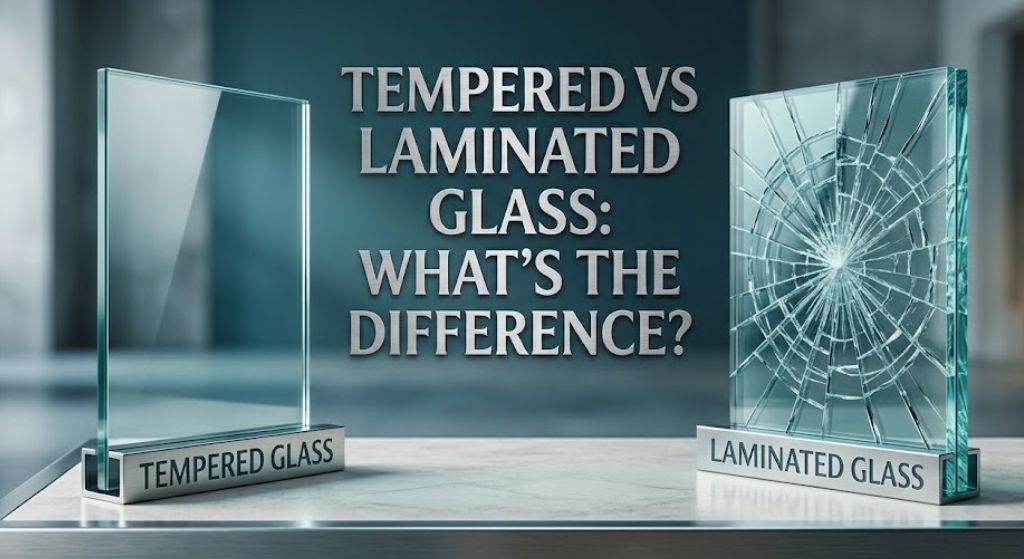
- Strength and Breakage Pattern: A major characteristic of tempered vs laminated glass is the way that tempered glass fractures. Rather than sharp, it breaks into small, less hazardous fragments, which make it ideally suited to safety-conscious designs such as tempered glass deck railing.
How Laminated Glass Is Made
- Layering with Interlayer (PVB): Laminated glass is made by interposing sheets of glass with a polyvinyl butyral (PVB) layer. This coating glues the glass together and makes it more durable.
- Impact Resistance and Shatter Behaviour: Laminated glass does not break like tempered glass but holds together. The interlayer will keep the fragments united, which minimizes the chances of harm.
Key Differences Between Tempered and Laminated Glass
Here, we‘re going to explain the key differences between tempered and laminated glass. Keep reading!
Strength and Durability
Although tempered glass is more resistant to impacts, laminated vs tempered glass comparisons have demonstrated that laminated glass is more resistant to overall durability because of its multiple layers.
Safety Features
Both are safe, however, differently. Glass that has been tempered breaks safely, whereas the laminated safety glass does not.
Sound Insulation
Custom laminated glass provides excellent sound insulation, making it ideal for homes in noisy areas.
UV Protection
Laminated glass absorbs a large percentage of UV rays, and interiors are not damaged by the sun.
Cost Comparison
Usually, tempered glass is cheap, whereas laminate glass is a little more costly because of the complicated production procedure.
Pros and Cons of Tempered Glass
| Advantages | Limitations |
| High strength | Cannot be cut after tempering |
| Heat resistance | Shatters completely upon impact |
| Best for tempered glass handrail and railings | —- |
Pros and Cons of Laminated Glass
| Advantages | Limitations |
| Superior safety | High Cost |
| Noise reduction | Slightly heavier than tempered glass |
| Excellent for glass railing on staircase designs | ——- |
Applications of Tempered vs Laminated Glass
- Residential Uses: Homeowners would also tend to use tempered or laminated glass in windows, doorways, and railings. Bathrooms have tempered glass, whereas windows in need of higher security have laminated glass.
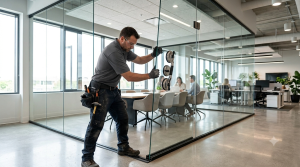
- Commercial Uses: The custom laminated glass is commonly used in office buildings as a facade and partition material because of its durability and soundproofing features.
- Automotive Industry: Laminated safety glass is commonly used to make car windscreens, and tempered glass is commonly used in side windows.
Which Glass Is Better for Your Needs?
The purpose, durability, and safety requirements of the glass are the key determinants of which glass fits your needs better. Glasses have various benefits, such as tempered glass, which is much stronger and safer as it breaks into small and less dangerous pieces, so it is best to use it on doors and windows, whereas laminated glass provides additional security and also acts as a good silencer as it remains intact when shattered.
Borosilicate glass is the most suitable material in case you require heat resistance, since it can withstand sudden temperature changes without breaking, as compared to soda-lime glass, which is cheaper and can be used for general purposes such as bottles or other simple objects. The final decision ultimately rests on the usage of the glass and where the glass will be utilized since the strength, safety, thermal resistance, and cost are all important in the selection of the appropriate type.
Conclusion
The argument of laminated vs tempered glass remains up to your needs. Both materials have their own special benefits, and being aware of their differences will make sure that you make the correct choice in your project. Durability, safety, or sound insulation – the type of glass to choose can have a big influence on the performance and durability.